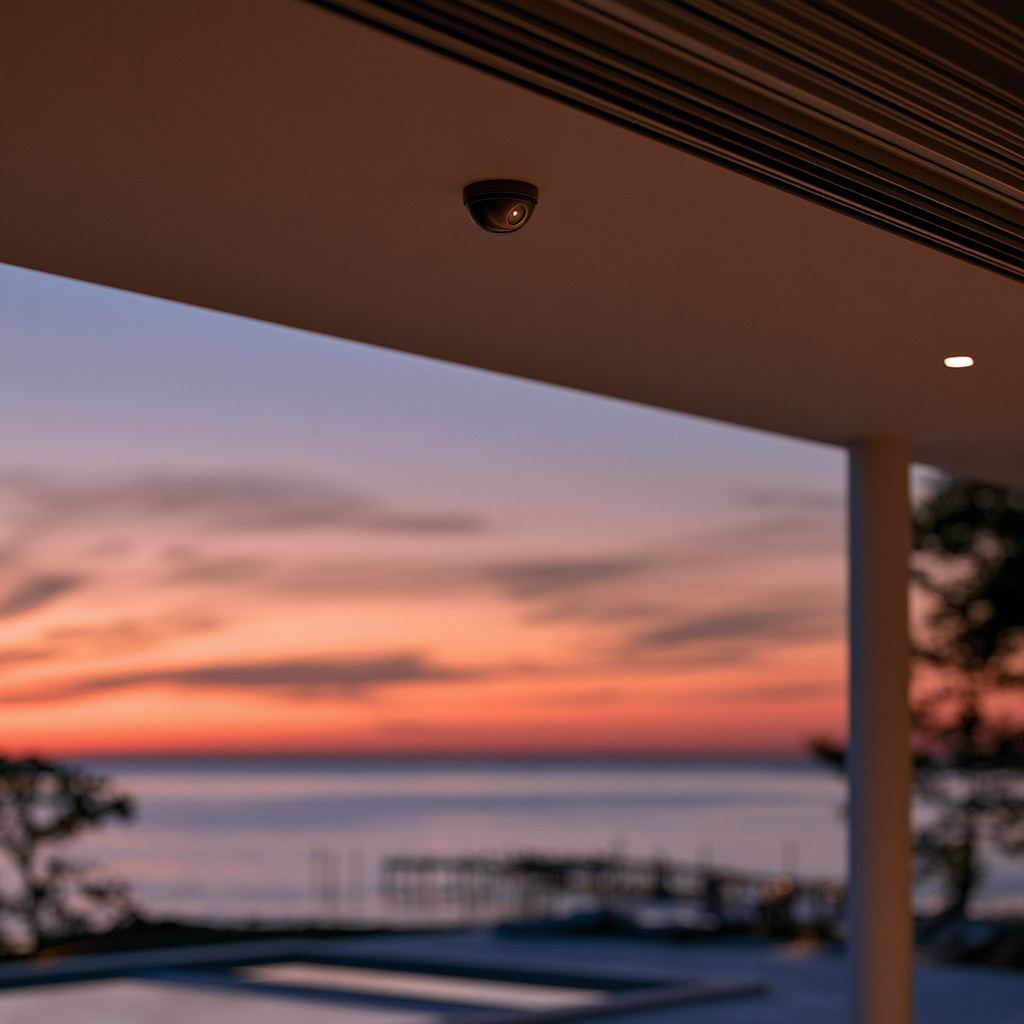
Recognition, not motion.
AI surveillance is a camera system that understands what it’s looking at. Instead of firing an alert every time something moves, it classifies the scene at the camera itself — person, vehicle, animal, package, license plate — and notifies you only when something genuinely warrants it. For a Southwest Florida estate, that’s the difference between forty useless alerts a night and the three that matter.
Recognition, not motion
A conventional camera detects change in pixels. A palm frond in the wind, rain on the lens, an iguana on the pool deck, headlights sweeping off the canal — all of it reads as “motion,” and all of it becomes a notification. Within a week the alerts are noise, and noise gets ignored. The camera is technically working and functionally useless.
Luxe installs cameras that run recognition on-device. The processing happens at the edge — on the camera — so classification is instant and continues even if the internet drops. The system knows the difference between a person walking up the dock and a heron landing on it, and it only speaks when there’s a reason to.
Object classification
Person, vehicle, animal, or package — identified on the camera, so every alert arrives already understood.
License plate capture
Every vehicle in the drive, logged and searchable, with plate reads at the gate and entry.
Searchable archive
Ask the footage a question — “every person at the gate after midnight” — and get results in seconds.
Discreet hardware
Cameras specified and placed to cover the property without turning the elevation into a security installation.
Built for the coast
Waterfront estates are a specific problem. Lots are long and deep, docks and shorelines need coverage, and salt air destroys hardware that wasn’t specified for it. We use marine-rated enclosures and corrosion-resistant mounts, run coverage that accounts for the dock and the water approach, and engineer the network so a camera at the end of a 300-foot lot is as reliable as the one over the front door. Concrete block construction — which stops Wi-Fi cold — is planned for, not discovered on install day.
The intelligence layer is covered in depth on the Intelligence page. Surveillance is almost always installed alongside access control and network infrastructure — the three form the security spine of the property.
Frequently Asked Questions
How is AI surveillance different from a normal security camera?
A normal camera alerts on any motion, which produces constant false alarms from wind, weather, and wildlife. AI surveillance classifies what it sees on the camera itself — person, vehicle, animal, package — and only alerts on the categories you care about. You get far fewer notifications, and the ones you get are meaningful.
Does it work if the internet goes out?
Yes. Because classification and recording happen at the edge — on the camera and a local recorder — the system keeps working and keeps footage during an outage. Remote viewing resumes when connectivity returns, and pairing it with Starlink failover keeps you connected through most outages entirely.
Can I search old footage?
Yes. Footage is indexed by what the system recognized, so you can search the archive by object and time — “every vehicle in the driveway last Thursday” — and get results in seconds instead of scrubbing hours of video.
Will the cameras hold up to salt air?
They will when they’re specified for it. We use marine-rated enclosures and corrosion-resistant mounts on waterfront properties, which is essential in coastal Southwest Florida — standard hardware corrodes within a season or two of salt exposure.
See what your property actually needs.
A complimentary walkthrough — coverage, placement, and a documented plan. No contract, no obligation.
Request a Consultation